Water in a Drying Land: Helping Nature Through a Changing Climate
There is something almost magical about the sound of water returning to the Australian bush after rain.
Within days, places that seemed quiet and lifeless begin to stir. Frogs call from temporary pools that did not exist a week before. Tiny annual plants germinate almost overnight, their seeds having waited patiently in the soil for months, and sometimes years, for exactly the right conditions. Insects emerge in astonishing numbers, providing food for birds that quickly take advantage of the sudden abundance. Creeks begin flowing once more, leaf litter softens beneath our feet, and the scent of damp earth rises through the forest as fungi awaken to continue the quiet work of decomposition.
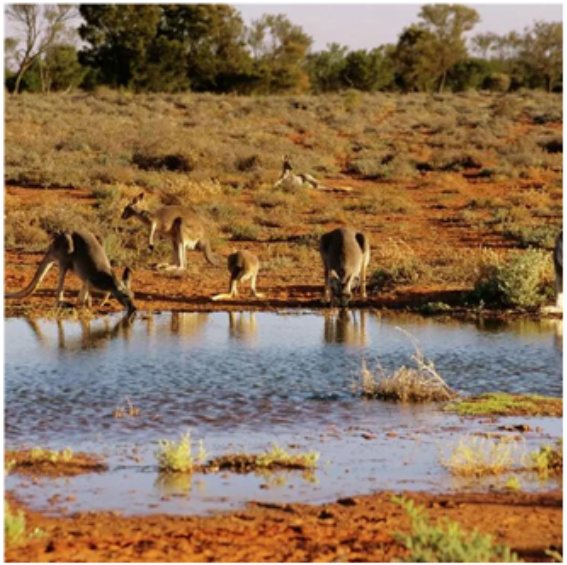
It is tempting to think that rain simply adds water to the landscape. Ecology tells a rather different story. Water does not merely support life; it organises it. The movement of water through soils, forests, rivers and wetlands determines where plants grow, when they flower, which insects emerge, where birds feed and breed, and ultimately how entire ecosystems function. Water is not simply another resource that living things require. It is one of the great organising forces of life itself.
Australia has always been a continent shaped by climatic extremes. Ours is the driest inhabited continent on Earth, and for millions of years its plants and animals have evolved under conditions of remarkable variability. Long periods of drought have alternated with seasons of abundance, while floods have periodically transformed inland landscapes into vast networks of wetlands teeming with life. Aboriginal peoples learnt to live within these rhythms over tens of thousands of years, developing deep understandings of Country that recognised water not simply as something to be consumed, but as one of the fundamental processes through which the living world continually renews itself.
The extraordinary resilience of Australian ecosystems reflects this long evolutionary history. Eucalypts regulate water loss through specialised leaves and deep root systems capable of accessing moisture unavailable to many other plants. Native grasses often remain dormant through prolonged dry periods before responding rapidly when rain returns. Some frogs survive drought by burrowing into moist soils and entering a state of dormancy until heavy rain triggers breeding. Waterbirds may travel hundreds or even thousands of kilometres as wetlands appear and disappear across the continent, while many nectar-feeding birds follow flowering events that themselves depend upon patterns of rainfall. These adaptations remind us that drought is not an ecological catastrophe in itself. It is part of the natural story of Australia.
What concerns ecologists today is not drought alone, but the changing conditions under which drought now occurs.
The climate system that has shaped Australia's ecosystems for millennia is itself changing. Human-induced climate change has increased average temperatures across Australia by approximately 1.5°C since 1910, with most of that warming occurring during the past seventy years (CSIRO & Bureau of Meteorology, 2024). Although this figure may appear modest, its ecological consequences are profound. Warmer air increases evaporation from rivers, wetlands and soils. Plants lose more water through transpiration. Snow melts earlier in alpine regions, while soils dry more rapidly following rainfall. Even where annual rainfall changes little, the landscape itself may become progressively drier because moisture is being removed more quickly than in previous decades (IPCC, 2023).
Against this background comes the natural climate phenomenon known as El Niño. El Niño has always been part of Australia's climate, occurring every few years as ocean and atmospheric conditions shift across the tropical Pacific. Historically, El Niño has increased the likelihood of below-average rainfall and above-average temperatures across much of southern and eastern Australia, although every event is different and local conditions vary considerably. The Bureau of Meteorology has advised that an El Niño is now established, and current seasonal outlooks indicate an increased likelihood of warmer and drier conditions across much of southern and eastern Australia during the coming months. Importantly, the Bureau also emphasises that El Niño is only one of several climate drivers affecting Australian weather and that long-range forecasts describe probabilities rather than certainties. Nevertheless, the current outlook warrants careful attention because prolonged warmth and reduced rainfall place additional stress upon ecosystems already adapting to a warming climate.
One of the challenges in understanding ecological change is that ecosystems seldom announce distress dramatically. More often, change begins quietly. A seasonal wetland that normally retains water until late spring dries several weeks earlier than usual. A creek that once flowed continuously contracts into a chain of isolated pools. Mosses disappear from fallen logs that previously remained damp throughout winter. The upper layers of soil dry more quickly after rain, while young seedlings experience longer periods without moisture. None of these observations seems particularly alarming when viewed in isolation. Together, however, they begin altering the relationships upon which entire ecological communities depend.
Modern ecology increasingly understands living systems not as collections of individual species but as networks of relationships (Chapin et al., 2011; Folke et al., 2004). Water lies at the centre of many of those relationships. As soils lose moisture, some native plants reduce flowering while others produce less nectar. Native bees, butterflies, beetles and other pollinating insects consequently encounter fewer food resources. Reduced insect abundance affects insectivorous birds attempting to feed nestlings during spring, while aquatic insects disappear as ephemeral pools dry, reducing food available to frogs, fish and waterbirds. Mammals often travel greater distances between reliable water sources, increasing both energy expenditure and competition. What appears to us as a slightly drier landscape may be experienced by wildlife as a profound reorganisation of the ecological networks upon which survival depends.
Healthy ecosystems do far more than support wildlife. They also store, slow and redistribute water across the landscape. In many respects, they function as nature's own water management systems, performing tasks that would otherwise require enormous engineering projects. Forests intercept rainfall before it reaches the ground. Leaf litter cushions the impact of raindrops, allowing water to infiltrate the soil rather than running rapidly across the surface. Fallen logs act like enormous sponges, absorbing moisture during wet periods and slowly releasing it over subsequent weeks. Beneath the surface, billions of soil organisms, together with intricate networks of fungi, continually build soil structure, creating countless tiny spaces through which water can move and be stored (Ellison et al., 2017; Lal, 2020).
This movement of water through healthy soil is one of the least appreciated ecological processes on Earth. Many people think of soil simply as something that anchors plant roots, yet a single handful of fertile soil contains billions of bacteria, kilometres of fungal hyphae, microscopic animals, earthworms and decomposing organic matter, all contributing to its structure and function. Organic matter acts rather like a sponge, increasing the soil's capacity to absorb rainfall while reducing evaporation during dry periods. Fungal networks connect plant roots with water and nutrients that would otherwise remain beyond their reach, while earthworms and other soil organisms continually create channels that allow rain to penetrate deeply rather than simply flowing away across the surface (Smith & Read, 2008; van der Heijden et al., 2015).
The consequences of healthy soil become particularly important during drought. When heavy rain falls onto compacted or bare ground, much of it is lost as surface runoff. It flows rapidly into drains and creeks before eventually reaching rivers and the sea. By contrast, rain falling onto well-vegetated soils rich in organic matter is absorbed, stored and gradually released over weeks or even months. In effect, healthy soils become underground reservoirs, quietly sustaining plants long after the rain has stopped. Ecologists increasingly recognise that one of the most effective ways of improving drought resilience is not simply storing more water in dams, but restoring the capacity of landscapes themselves to hold water where it falls (FAO, 2021).
Forests perform similar functions on a much larger scale. Their canopies reduce the direct impact of intense rainfall, while deep root systems stabilise soil and create pathways through which water infiltrates underground. Water absorbed by trees is later released through transpiration, contributing moisture back into the atmosphere where it can influence local humidity, cloud formation and, under some circumstances, regional rainfall patterns. Over recent decades scientists have increasingly recognised that forests are not simply passive recipients of rainfall. They actively participate in the water cycle itself, helping regulate local and regional climates through the continual movement of water between soil, vegetation and atmosphere (Bonan, 2008; Ellison et al., 2017).
Wetlands provide another remarkable example of nature's quiet engineering. To the casual observer they may appear to be little more than swamps or shallow ponds. Ecologically, however, they function as the kidneys of the landscape. During periods of heavy rainfall they slow floodwaters, allowing sediments to settle while replenishing groundwater. During dry periods they gradually release stored water, providing refuge for fish, frogs, insects and waterbirds long after smaller pools have disappeared. At the same time they filter nutrients and pollutants, improving downstream water quality while supporting some of Australia's richest concentrations of biodiversity (Millennium Ecosystem Assessment, 2005).
Perhaps the most important lesson emerging from modern ecology is that drought is rarely just about the absence of rain. It is also about the capacity of landscapes to capture, retain and redistribute the water they receive. Two landscapes may experience identical rainfall, yet respond in remarkably different ways. One, with healthy soils, intact vegetation and functioning wetlands, continues supporting a remarkable diversity of life. The other, where soils have been compacted, vegetation removed and waterways simplified, loses moisture rapidly and enters ecological stress far sooner. Rainfall may be the same. Resilience is not.
This understanding has important implications as Australia continues warming. We often think of adaptation in terms of larger dams, desalination plants or new technologies. These undoubtedly have important roles in securing water for human communities. Yet nature has been solving the problem of water storage for hundreds of millions of years. Every healthy forest, every intact wetland and every fertile soil represents an extraordinary water management system created not through engineering, but through countless relationships among plants, fungi, animals, microorganisms and the physical environment. Protecting these systems is therefore not simply an act of conservation. It is one of the most practical forms of climate adaptation available to us.
As individuals, this broader understanding also changes the way we think about our own gardens and properties. Rather than seeing them as isolated pieces of land, we begin recognising them as small parts of much larger ecological systems. Every layer of mulch spread beneath a tree, every compost heap that increases soil organic matter, every indigenous shrub planted to shade the ground and every rainwater tank that reduces pressure on reticulated supplies contributes, however modestly, to the resilience of the landscape as a whole. Ecology repeatedly reminds us that large patterns emerge from countless small interactions. The resilience of an entire region ultimately depends upon the resilience of thousands of individual places.
Becoming Good Stewards During Dry Times
When we understand how water moves through ecosystems, our response to a dry year begins to change. Rather than asking only how we can keep our own gardens alive, we begin asking a broader question: how can we help maintain the countless ecological relationships that depend upon water? Fortunately, many of the actions available to us are surprisingly simple, and while no individual garden can transform an entire landscape, thousands of gardens managed thoughtfully can make a genuine difference.
Perhaps the most immediate way we can assist wildlife is by providing clean, reliable water. During prolonged dry periods, natural water sources often contract into fewer and smaller refuges, concentrating birds and other animals into limited areas. A well-maintained bird bath can therefore become an important source of water, particularly in urban and rural landscapes where wetlands have been drained or natural waterholes have disappeared. Yet providing water requires more thought than simply placing a bowl in the garden.
Small birds live with constant danger from predators. A bird bath positioned in the middle of an open lawn may appear attractive to us, but to a fairy-wren or thornbill it represents considerable risk. Water is far more useful when placed near shrubs or small trees that provide immediate refuge should a hawk or currawong appear overhead. Equally important is hygiene. During hot weather, water should be replaced daily and bird baths scrubbed regularly to reduce the build-up of algae, faeces and pathogens. Earlier this year I wrote about avian influenza and the importance of maintaining clean bird baths. The same principle applies during drought. Clean water supports healthy wildlife; neglected water sources can inadvertently increase disease transmission.
Birds, however, are only one small part of the story. We often forget that many insects also require access to water, particularly during periods of prolonged heat. Native bees, hoverflies, butterflies and even predatory wasps all drink, yet deep containers of water can become lethal traps. A shallow dish containing clean water with several stones or pieces of gravel projecting above the surface allows insects to land safely, drink and fly away again. Such a simple arrangement may support many of the pollinators upon which both native plants and food crops depend.
The same principle extends to frogs, reptiles and small mammals. A pond with gently sloping edges is far more valuable than one with steep sides because animals can enter and leave safely. Dense vegetation around part of the pond provides shade, moderates water temperature and creates the humid conditions required by frogs and countless aquatic invertebrates. Even small areas of damp vegetation beneath shrubs can become important refuges during heatwaves, allowing moisture-loving organisms to survive until cooler conditions return.
Water alone, however, is rarely enough. Shade is equally important. During periods of extreme heat, the temperature difference between exposed ground and the shaded area beneath a shrub or mature tree can be remarkable. Birds retreat into dense foliage during the hottest part of the day. Lizards shelter beneath fallen timber. Countless insects avoid lethal temperatures by moving only a few centimetres beneath leaf litter or into the cooler microclimate created by vegetation. As gardeners, we sometimes remove these features in the pursuit of neatness, yet from an ecological perspective they provide some of the most valuable habitat in the landscape.
Leaf litter illustrates this beautifully. To many people it appears untidy, something to be raked up and removed. In reality it is one of nature's most effective protective blankets. It shades the soil, reducing evaporation while moderating temperature. It provides food for fungi, bacteria and detritivorous invertebrates that recycle nutrients back into the ecosystem. Beetles, spiders, millipedes and countless other small animals spend much of their lives within it, while many birds forage through the leaves in search of these hidden food sources. Removing every fallen leaf may produce a tidy garden, but it also removes an entire ecological community.
The same can be said of fallen branches and old logs where safety permits them to remain. Dead timber stores moisture long after surrounding soils have dried, creating cool, humid refuges for fungi, mosses, insects, reptiles and small mammals. As decomposition slowly proceeds, nutrients are returned to the soil and become available to future generations of plants. What appears lifeless is, in reality, supporting a remarkable diversity of living organisms. Modern ecology has repeatedly shown that dead wood is not a sign of neglect but an essential component of healthy ecosystems (Harmon et al., 1986; Lindenmayer et al., 2012).
Our choice of plants also becomes increasingly important as the climate changes. Indigenous species that evolved within local conditions generally provide far greater ecological value than exotic ornamentals because they support the insects, birds and other wildlife with which they have co-evolved over thousands of years. Flowering shrubs provide nectar during periods when few other food sources are available, while grasses and groundcovers protect the soil from direct sunlight and reduce water loss. This does not mean every garden must consist entirely of indigenous plants, but it does encourage us to think of gardens not simply as collections of attractive species, but as functioning ecosystems capable of supporting many forms of life.
Perhaps the greatest contribution any of us can make, however, lies beneath our feet. Every handful of compost added to the soil, every layer of mulch spread around a tree and every effort to minimise unnecessary soil disturbance increases the landscape's capacity to retain water. Healthy soil is built gradually through the accumulation of organic matter and the quiet work of billions of organisms that most of us never see. During dry years, that hidden community becomes one of our greatest allies, storing moisture, supporting plant growth and helping landscapes remain resilient long after the rain has ceased.
There is an important lesson here that extends well beyond our own gardens. We often imagine conservation as something that happens only within national parks or remote wilderness areas. Yet many Australian species now depend upon landscapes shared with people. Suburban gardens, rural shelterbelts, roadside vegetation and urban wetlands all contribute to the movement of birds, insects and other wildlife across increasingly fragmented environments. A single garden may seem insignificant, but connected with thousands of others it becomes part of a much larger network of habitat that helps sustain biodiversity through difficult years.
In this sense, preparing for a hotter and potentially drier future is not simply about protecting our own homes from drought. It is about recognising that every place we care for becomes part of the wider landscape. Every tree we plant, every bird bath we maintain, every patch of healthy soil we nurture and every wetland we protect strengthens the resilience not only of our own property, but of the living community to which it belongs.